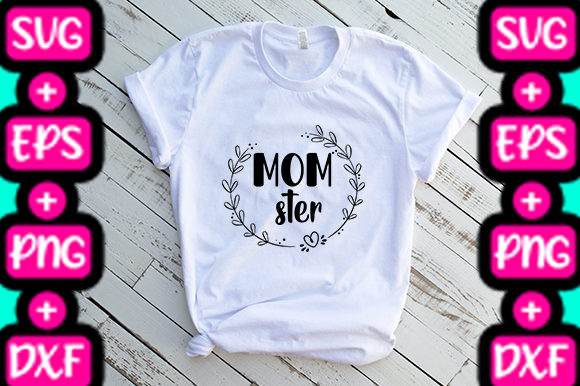
Momster: A Playful, Punchy Embroidery Design Worth Testing
As someone who’s stitched hundreds of custom pieces—from boutique baby onesies to Etsy shop sweatshirts—I opened the Momster design expecting charm with a wink. What I found was more than cute: it’s a confident, compact graphic that balances boldness and approachability in a way that translates beautifully across real embroidery projects.
First Impressions: Personality That Stitches Well
Momster lands with immediate warmth and humor—think “MOM” reimagined as a friendly, slightly mischievous monster face, not scary, but spirited. The shape is compact and centered, with rounded features, expressive eyes, and clean outlines. There’s no excessive detail, which is smart: it avoids stitch crowding on small hoops and reads clearly even at 3–4 inches tall. As a machine embroidery design, its visual rhythm feels intentional—not just drawn, but *engineered* for thread. It’s the kind of graphic that works equally well as a standalone embroidered patch or a playful accent on a kitchen towel or apron.
A Real-World Test: Stitching Momster on a Linen-Cotton Tote Bag
Last week, I used Momster on a natural linen-cotton tote for a local mom-owned café’s gift bundle. I chose a medium-weight cutaway stabilizer, 40-weight polyester thread in charcoal and cream, and stitched at 3.5 inches wide. The result? Crisp satin-stitched outlines, smooth fill-stitch cheeks, and zero puckering—even over the subtle texture of the fabric. Customers loved how it looked: handmade but polished, nostalgic but fresh. One repeat buyer told me she’d bought two bags—one for herself, one as a baby shower gift—because “it felt like a hug in embroidery form.” That’s the power of a well-balanced design like Momster: it carries emotional weight without needing extra embellishment.
Where Momster Shines (and Where to Pause)
Momster excels in projects where clarity, charm, and commercial appeal intersect:
- Custom apparel: Especially on crewneck sweatshirts, relaxed-fit tees, and lightweight hoodies—its proportions hold up beautifully on curved chests and sleeves.
- Baby embroidery: Perfect for onesies, burp cloths, and nursery pillows—soft enough for tiny wearers, bold enough to stand out in photos.
- Tote bag design and tea towel embroidery: Its centered layout and moderate density prevent stiffness while maintaining visual impact.
- Holiday embroidery and wedding gifts: Think “Mom”-themed bridal party totes or Mother’s Day pillow covers—it adds personality without overwhelming sentiment.
- Embroidered patch production: Clean edges and minimal interior detail make it ideal for iron-on or sew-on patches sold in craft fairs or on Etsy.
But—and this matters—Momster isn’t universally forgiving. Use caution on:
- Thin or highly stretchy fabric (like jersey knits) without proper stabilizer—those rounded curves can distort if tension isn’t dialed in.
- Dark fabric without testing thread contrast first—cream or light gray may disappear unless you switch to bright white or metallic accents.
- Curved surfaces like caps, especially low-profile ones—its width-to-height ratio means it may need slight vertical compression to avoid distortion near the bill.
- Small hoop sizes under 4 inches—you’ll lose definition in the eyes and mouth; aim for at least 3.75" to preserve expression.
- Frequent-wash items like baby bibs or kitchen towels—confirm stitch density supports durability, and consider reinforcing high-flex zones with a light running stitch border.
Design Assets That Build Trust—Not Just Aesthetics
What makes Momster valuable beyond its look is how it supports your credibility as a maker. When customers see a design this cohesive—balanced spacing, intentional negative space, thoughtful scale—they subconsciously trust the craftsmanship behind it. That perception lifts the perceived value of your entire product line, whether you’re selling finished embroidered patches or digital embroidery files. For Etsy sellers and small shop owners, that trust converts directly into repeat orders and word-of-mouth referrals.
It also plays well with branding. Unlike overly trendy graphics that age quickly, Momster has timeless whimsy—it fits a modern-minimal boutique just as easily as a vintage-inspired craft fair stall. And because it’s delivered as SVG, DXF, EPS, and PNG, you’re not locked into one workflow: use the vector files for digitizing, the PNG for printable mockups, and the EPS for professional print collateral.
Practical Embroidery Designer Notes Before You Stitch
Before committing Momster to your next client project or batch run, do these five things:
- Test on scrap fabric—especially if using textured, dark, or stretchy material. Watch how the eyes and mouth hold shape during stitching.
- Check thread color contrast in both natural and artificial light. A warm beige might glow on oat-colored linen but fade on heather grey.
- Review stitch density in your embroidery software—if it’s dense, add a touch of underlay or reduce fill angle for breathability on apparel.
- Confirm hoop size compatibility with your machine and intended garment placement. Don’t assume it fits a 4"x4" hoop without measuring.
- Verify licensing terms before selling finished products or reselling the digital embroidery file—this is critical for craft business owners and digital product sellers.
Also worth noting: while Momster is categorized as a T-Shirt Design and Graphics asset, its strength lies in versatility—not limitation. It’s not just for t-shirts. It’s for the handmade product that makes someone smile when they unbox it. It’s for the personalized gift that feels seen. It’s for the small shop product that stands out in a sea of generic fonts and clip art.
If you’re choosing between dozens of “mom” designs for your next embroidery project, let Momster earn its place—not because it’s trendy, but because it stitches cleanly, sells thoughtfully, and carries heart without shouting. That’s the mark of a truly useful design asset.