Elf Surveillance Team Shirt: A Practical Design Review
I pulled up the Elf Surveillance Team Shirt file while sketching out ideas for a small holiday batch I am planning for a local craft market. The name alone brought a grin to my face before I even opened the folder. There is a playful, slightly mischievous energy in the concept that immediately tells me this is not a stiff corporate holiday graphic. It has personality. It feels like something a parent would laugh at while folding laundry or a friend would point to at a party and say, "That one. I need that one."
Before diving into how this design behaves in real project use, it is worth noting what you actually receive. The product comes as PNG, JPG, EPS, and DXF files. Those are graphic formats, not pre-digitized embroidery files. That distinction matters a lot depending on your craft. For paper crafts, vinyl decals, card making, scrapbooking, and printable mockups, you are ready to go right out of the download folder. For machine embroidery, you will need to digitize the artwork yourself or send it to a digitizing service. I have done that enough times to know what to look for in the source art before committing stitch to thread, and I will walk through that thought process here.
First Impression And The Mood It Creates
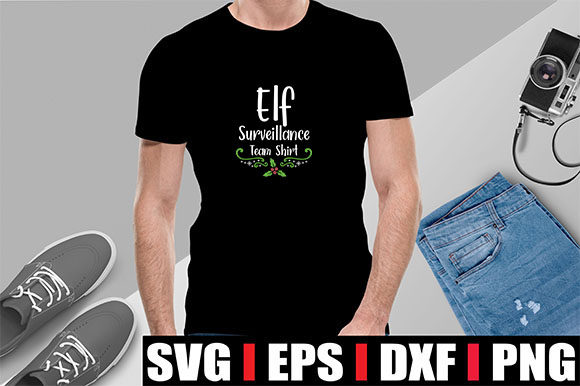
Opening the Elf Surveillance Team Shirt graphic, I immediately noticed the holiday theme without it feeling tired or recycled. The mood lands somewhere between cheeky and cozy. It suggests a secret little operation run by elves, which taps right into the magic that makes holiday crafting so fun in the first place. There is a narrative quality here. It is not just a decorative element. It tells a tiny story, and that narrative is what separates a forgettable holiday shirt from one that customers genuinely connect with.
The layout feels intentional. The typography and any accompanying imagery work together rather than fighting for attention. This matters enormously when you are thinking about how the design will translate across different surfaces. A cluttered graphic becomes a muddy mess on a textured fabric. A well-balanced one holds its ground on a tote bag, a sweatshirt, or even a small baby onesie. From what I can see, this one leans toward the well-balanced side.
Where This Design Naturally Belongs
Some designs are versatile. Others are specific. Elf Surveillance Team Shirt sits somewhere in the middle, and I mean that as a compliment. The obvious home for it is custom apparel. A crewneck sweatshirt in forest green with this graphic stitched across the chest feels like an instant holiday staple. A long-sleeve t-shirt in heather gray would give it a more understated, everyday wearability. I can also see it living happily on a canvas tote bag, the kind someone carries to a farmers market or uses to wrap a gift instead of disposable paper.
Beyond apparel, the design would translate nicely onto a kitchen towel as part of a holiday hostess gift set. Picture a flour sack towel with this graphic paired with a wooden spoon and a jar of hot cocoa mix. That is the kind of product that moves quickly at craft fairs and in Etsy shops during November and early December. A round version or a cropped detail could also work as an embroidered patch attached to a beanie or a stocking. The theme is flexible enough to stretch across multiple product categories without losing its identity.
For crafters who work with vinyl, the DXF and EPS formats open up possibilities for decal application on mugs, water bottles, or even a festive mailbox wrap. The paper craft crowd gets clean PNG and JPG files for invitations, holiday cards, and scrapbook layouts. Knowing the file types upfront helps you plan your production workflow without unpleasant surprises.
The Embroidery Reality Check
Here is where I put my digitizer hat on. Since the provided files are graphic formats and not stitch files, anyone wanting to use Elf Surveillance Team Shirt for machine embroidery needs to factor in the digitizing step. That is not a drawback. It is simply the reality of working with design assets that span multiple craft types. What I always do with a new graphic is open it in my editing software and examine the linework, the density of details, and the overall scale.
If the design includes delicate details or thin connecting lines, those need careful handling during digitizing. A satin stitch works beautifully for clean borders and lettering, but it can become problematic if the strokes are too narrow. In those cases, I might adjust the artwork slightly or opt for a running stitch to preserve legibility. Thicker, more substantial shapes can take a fill stitch without puckering, provided I use the right stabilizer and hoop tension.
Scale is another practical concern. A design that looks crisp on a screen at six inches wide might lose detail when shrunk to fit a baby bodysuit or a cap front. Before committing to a production run, I always test the digitized version at the actual intended size on scrap fabric. Cotton twill, jersey knit, and fleece all behave differently under the needle. A test stitch reveals thread tension issues, density problems, and whether small details close up or stay open.
A Real Project Scenario To Frame The Thinking
Let me ground this in something concrete. I recently prepared a custom embroidered tote bag for a client who wanted a playful holiday gift for her sister, a mom of three who loves a good laugh. The brief was simple: something festive, not too saccharine, and durable enough to survive actual use. I tested several designs on a medium-weight canvas tote in natural beige. Elf Surveillance Team Shirt was one of the contenders, and it stood out because the theme immediately sparked a reaction. When I showed the mockup, my client laughed and said, "That is my sister in a nutshell."
That moment of recognition is what you chase as a maker. It converts a casual browser into a buyer. On the tote, the design held up well visually. The text was readable at about five inches wide. The graphic elements had enough breathing room that they did not blur together. I used a medium-weight cutaway stabilizer because canvas can be forgiving, but I still wanted clean stitch definition. The result was a product that felt substantial and giftable.
For a project like this, I would also consider offering the tote in a few color options. Natural beige, soft cream, and a muted sage green all complement the holiday theme without competing with it. Darker fabrics like charcoal or navy could work too, but they require a shift in thread color planning. White or light gray thread on a dark background can create a high-contrast look that feels modern and crisp. On lighter fabrics, a deep evergreen or burgundy thread leans into the traditional holiday palette.
Fabrics, Surfaces, And The Places To Be Cautious
Not every surface is kind to a design with this much character. I would be cautious about using Elf Surveillance Team Shirt on highly textured fabrics like terry cloth or chunky knit sweaters. The loops and texture can swallow fine details and make the stitching look uneven, even if your digitizing is flawless. Stretchy fabrics like thin jersey or performance blends also need extra care. A ballpoint needle and a quality fusible stabilizer can help, but I still prefer to test extensively before offering anything on a stretchy tee.
Small hoop sizes present another limitation. If you are working with a four-by-four inch hoop, you need to scale the design down carefully. Some details may need to be simplified or removed to keep the final stitch-out clean. I learned this the hard way years ago with a detailed holiday design that looked fantastic at six inches and turned into an unrecognizable blob at three. Now I always check small-scale viability during the digitizing stage, not after I have already promised a product.
Curved surfaces like caps and hats also demand attention. The center seam on a baseball cap can distort a design if it is not positioned precisely. A patch approach often solves this problem elegantly. Embroider the design onto a flat piece of fabric or felt, trim it, and attach it as a patch. That method also gives the final product a tactile, dimensional quality that customers tend to perceive as higher value.
Visual Appeal And Customer Perception
From a product presentation standpoint, Elf Surveillance Team Shirt brings a lot to the table. The humor is accessible without being overly niche. It appeals to parents, grandparents, and anyone who enjoys the lighter side of the holiday season. That broad appeal is valuable for small business owners who need designs that can move across different customer segments without feeling generic.
In a marketplace crowded with reindeer silhouettes and scripted "Joy" designs, a graphic with a wink and a nod helps your product listing stand out. On Etsy, a thumbnail that shows this design on a well-styled mockup can catch a shopper's eye while they scroll. The same goes for craft fair displays. A sample shirt or tote bag hung at eye level with this graphic invites people to stop, read, and smile. Once they smile, the conversation starts, and conversations lead to sales.
Consistency is another factor I weigh heavily. If your brand voice is playful, handmade, and family-oriented, this design fits right in. If your shop leans toward minimalist, monochromatic, or ultra-elegant, it might feel like an outlier. Knowing your brand and your audience helps you decide if the humor lands where you need it to.
Practical Notes For The Working Maker
Before you add Elf Surveillance Team Shirt to your product lineup, there are a few steps I recommend taking to protect your time and your reputation. First, check the licensing terms that come with your purchase. The product description mentions possible uses including paper crafts, vinyl, decals, and scrapbooking, but you want explicit clarity on commercial use. Can you sell finished physical products? Can you use it on items you list in your Etsy shop? Can you incorporate it into a larger design bundle you sell? These questions matter, and the answers should come from the license, not from assumptions.
Second, test the design in black and white before you finalize thread colors. Printing or viewing a graphic in grayscale reveals contrast issues that color can mask. If the design still reads clearly without color, you know the composition is strong. If it turns into a gray smudge, you may need to adjust the digitizing or simplify elements.
Third, run a wash test on your finished sample. A design that looks pristine fresh off the hoop can degrade after five washes if the thread tension was off or the stabilizer was inadequate. I toss my samples through a normal wash and dry cycle and inspect them under good light. If anything shifts, puckers, or frays, I go back and fix the process before a customer ever sees it.
Fourth, mind your thread inventory. A design with multiple colors can eat through spools faster than you expect, especially if you are producing a large batch. Plan your thread purchases accordingly and keep notes on which brands and color numbers you used so you can replicate the look consistently across multiple production runs.
Design Quality And Long-Term Product Value
As someone who has cycled through hundreds of design files over the years, I pay attention to how a design ages. Trendy graphics have a short shelf life. They spike in popularity and then fade. Elf Surveillance Team Shirt taps into a seasonal theme that returns every year, which gives it recurring value. You can bring it back each holiday season with fresh product offerings and updated mockups without it feeling stale.
The design also lends itself to personalization. Adding a family name, a year, or a short custom message beneath the main graphic can increase the perceived value significantly. Personalized holiday items command higher prices and tend to sell earlier in the season because customers know they need lead time for custom work. Having a strong base design to build on simplifies that process.
For digital product sellers, the PNG and JPG formats work well in printable mockups and design bundles. The EPS file gives you scalability for larger formats without quality loss, which is useful if a customer wants the graphic for a wall print or a large decal. The DXF file opens doors for crafters who use cutting machines, expanding the potential audience beyond just embroiderers and paper crafters.
Who This Design Works Best For
After spending real time thinking through the applications, the limitations, and the market potential, I see Elf Surveillance Team Shirt as a strong fit for embroidery designers, small shop owners, Etsy sellers, craft fair vendors, and creative entrepreneurs who want a holiday design with personality. It rewards makers who are willing to test, digitize thoughtfully, and present it on quality blanks. It may not be the right pick if you need a ready-to-stitch embroidery file with no extra steps, or if your audience prefers subtle, understated holiday decor. But if humor, warmth, and a bit of elf mischief match your brand, this design can earn its place in your product rotation.
Take the time to stitch a sample, photograph it well, and write a product description that captures the playful spirit of the graphic. When a customer sees the finished piece and laughs out loud, you have done your job. And that is really what good design is all about.