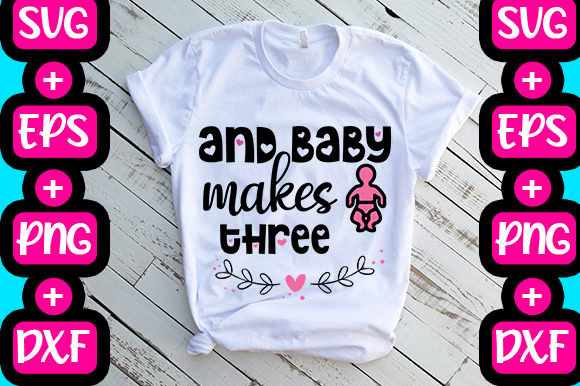
And Baby Makes Three
A Designer’s First Glance: Warm, Simple, and Ready for Real Life
When And Baby Makes Three opens on screen, it lands like a soft sigh—not flashy, not fussy, but unmistakably heartfelt. It’s a gentle phrase-based design, likely centered around a clean typographic layout with subtle decorative accents (a tiny heart, cradle, or footprint might nestle near the text). The mood is tender, inclusive, and quietly celebratory—perfect for baby announcements, nursery decor, or personalized gifts for new parents. As an embroidery designer who’s stitched hundreds of “welcome baby” pieces, I immediately ask: *Does this translate cleanly from vector to thread? Will it hold up on a sweatshirt cuff or a linen tea towel? Does it feel handmade—or just printed?*
Where It Shines: Embroidery Projects That Feel Thoughtful, Not Trendy
And Baby Makes Three isn’t built for high-density monograms or intricate floral borders—it’s designed for clarity, warmth, and wearability. In real-world use, it excels on:
- Custom apparel: A single-line satin stitch version works beautifully on the chest of a unisex sweatshirt or the front pocket of a denim tote bag—clean, legible, and emotionally resonant.
- Baby embroidery: Stitched in soft pastel threads on organic cotton onesies or burp cloths, it reads as gentle and intentional—not cutesy or overwhelming.
- Embroidered patches: When digitized with balanced fill stitch density and smooth satin edges, it holds shape well on twill or felt backing—ideal for boutique aprons or nursery wall hangings.
- Holiday embroidery & personalized gifts: Think embroidered kitchen towels for baby showers, pillow covers for new grandparents, or linen napkins for a gender-reveal brunch. Its simplicity ensures it doesn’t compete with fabric texture or seasonal embellishments.
For Etsy sellers and small shop owners, And Baby Makes Three is a quiet workhorse—low-risk to produce, high-emotion payoff. Customers recognize sincerity faster than sparkle.
Where to Pause: Fabric, Fit, and Functional Reality
This design asks for thoughtful execution—not because it’s difficult, but because its impact lives in restraint. Here’s where attention matters:
- Small hoop sizes: If the original file includes tight kerning or fine serifs, test stitching at 3"–4" width first. Tiny letterforms can blur on dense fill or low-thread-count fabric.
- Textured or stretchy fabric: On terry cloth towels or ribbed knit onesies, stabilizer choice is non-negotiable. A medium-weight cutaway helps prevent puckering without adding bulk.
- Dark fabric: The phrase relies on legibility. Avoid ultra-thin fonts or light gray fills—opt instead for bold, open letterforms and high-contrast thread colors (navy on cream, charcoal on oat, forest green on ivory).
- Curved surfaces: Caps or curved pillow seams demand careful hooping and possibly slight letter spacing adjustment. Running stitch outlines help define edges where satin stitch might distort.
- Frequent washing: For baby clothes or kitchen linens, confirm stitch density supports durability—avoid overly dense fill areas that stiffen fabric or trap moisture.
What It Adds to Your Finished Product—Beyond the Thread
Used well, And Baby Makes Three elevates more than just the item—it strengthens your brand voice. It signals care, intention, and emotional intelligence. A customer buying an embroidered tote bag with this phrase isn’t just purchasing utility; they’re investing in meaning. That builds trust, repeat orders, and word-of-mouth referrals.
For craft business owners, it’s versatile enough to anchor multiple product lines: pair it with minimalist packaging for a boutique baby line, layer it subtly into a holiday gift set, or use it as a consistent motif across digital embroidery files and printable mockups. Its strength lies in how easily it integrates—no forced themes, no visual shouting.
Practical Designer Notes Before You Stitch
Before committing thread and time:
- Test on scrap fabric first—especially if using textured, dark, or stretchy material.
- Review thread color contrast in natural light. What reads clearly on screen may vanish on navy fleece.
- Check stitch density. If the file came as a generic SVG or PNG, it’s not yet an embroidery file—you’ll need digitization. Don’t skip this step.
- Confirm hoop size compatibility. A 5" wide phrase won’t fit comfortably in a 4" hoop without compression or repositioning.
- Inspect small details: Are dots over i’s or crossbars on t’s clear at 1/4" scale? Zoom in digitally before sending to machine.
- Test black-and-white mockups to assess silhouette strength—this design should read even without color.
- Compare light/dark backgrounds side-by-side. Does it retain warmth on black cotton? Does it feel airy on white linen?
- Use proper stabilizer—cutaway for knits, tear-away for stable wovens, fusible for lightweight linens.
- Verify licensing before selling finished items or reselling the digital embroidery file. This is especially critical for Etsy sellers and commercial embroidery shops.
Final Thought: A Design That Serves the Moment
And Baby Makes Three isn’t about technical fireworks—it’s about resonance. As a T-Shirt Designs asset repurposed for embroidery, it reminds us that sometimes the most powerful graphics are the ones that leave space for feeling. Whether you’re stitching a one-off baby blanket or building a collection of nursery-themed embroidery files for your digital shop, this phrase earns its place by being both simple and sincere. Just remember: its quiet strength only comes through when the details—the stabilizer, the thread, the fabric choice, the digitizing—are handled with equal care.